
Lift off the throttle in a turbo car and the turbo doesn't stop. It keeps spinning and pushing air at a throttle that has just shut. The blow-off valve is what gives that air somewhere to go.
The short answer
A blow-off valve is a pressure relief valve on the intake side of a turbo engine, between the compressor and the throttle. When you lift off, it opens and lets the trapped boost out, either into the air or back into the intake ahead of the turbo. That keeps the airflow from reversing through the compressor, which is called surge.
Why does a turbo need one?
Garrett, the turbo maker, explains the problem. When the throttle closes, the amount of air flowing drops sharply, but the turbo is still spinning and still making boost. That pressure has nowhere to go, and the flow turns unstable.
The result is compressor surge, and Garrett says closing the throttle quickly after boosting is a common way to get it. You can hear it: GFB, which makes blow-off valves, says the fluttering noise is air passing backwards through the turbo.
How much harm it does is where the makers disagree. Garrett says surge stresses the turbo's shaft and bearings and can eventually lead to thrust bearing failure. GFB argues that in most cases surge won't cause significant wear, though severe surge could.
How does a blow-off valve work?
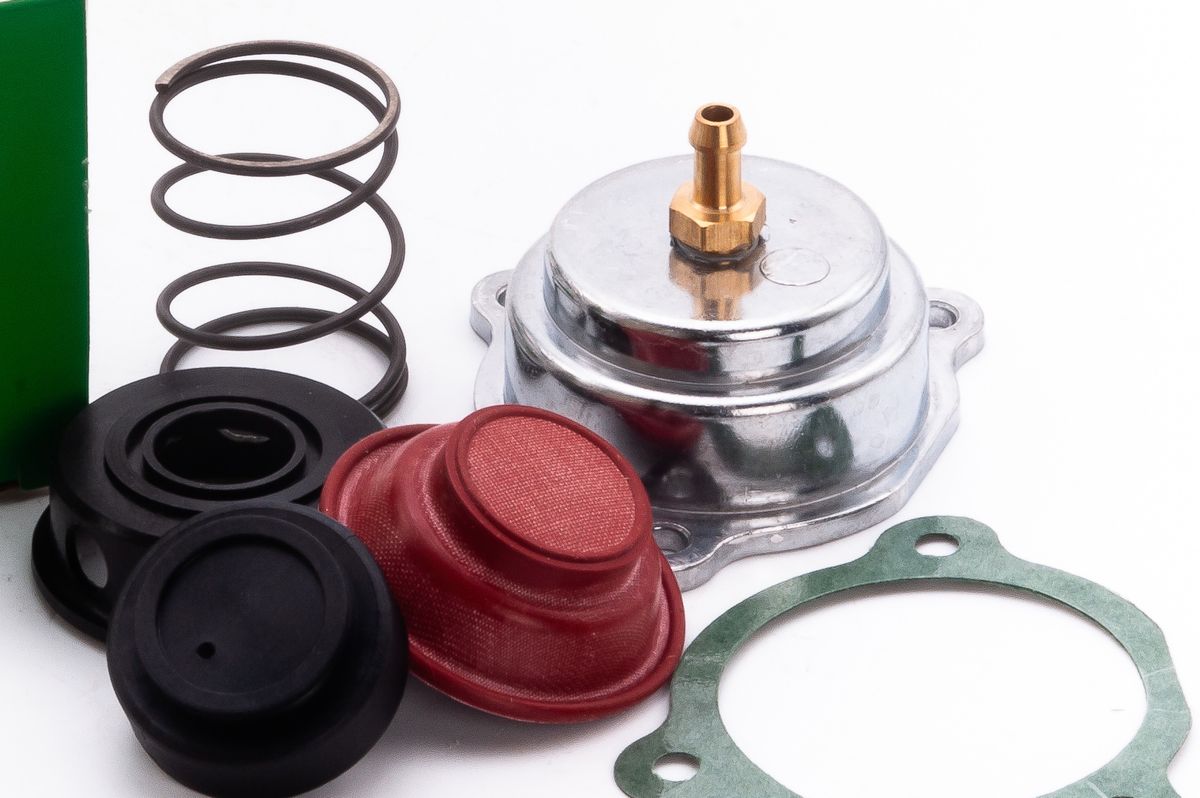
A spring holds the valve shut. A hose runs from the top of the valve to the intake manifold, after the throttle, and Garrett says the valve uses that manifold signal plus the spring to tell when the throttle has closed. When you lift off, the signal turns to vacuum and pulls the valve open, and the boost escapes.
Venting vs recirculating
There are two places the air can go:
| Vent to atmosphere | Recirculating | |
|---|---|---|
| Where the air goes | Out into the air | Back to the compressor inlet |
| Usually fitted by | Aftermarket | Carmakers |
| On a car with a MAF sensor | Can make it run rich | Keeps the measured air |
GFB says carmakers fit recirculating valves, while aftermarket valves usually vent to the air. Carmakers' reasons for fitting a valve at all, GFB says, are mainly emissions, fuel economy and drivability. Some split the difference: Turbosmart's Dual Port valves send part of the air back into the intake.
Why do MAF cars care?
GFB says most factory turbo cars run some form of mass airflow (MAF) sensor. GFB points out that any air a valve vents has already passed that sensor and been measured, and dumping it causes a brief rich mixture. COBB, which makes tuning tools, says running rich can foul plugs, make the idle surge and cause backfires. Turbosmart says some cars with sensitive air-flow meters don't respond well to a venting valve.
Electronic valves
Newer valves are often electric. Motorservice says direct electronic control does away with vacuum reservoirs and the other pneumatic parts. Subaru's 2022 WRX press kit lists electronically controlled wastegate and air bypass valves. GFB says the WRX's ECU opens its valve the instant the throttle starts to close, and that European carmakers have used electronic valves almost exclusively for years. Pierburg says it was the first to mass-produce an electric bypass valve, in 2004.
Blow-off valve vs wastegate
They both vent, but on different sides of the turbo. Garrett puts the blow-off valve on the charge air side and the wastegate on the exhaust side, before the turbine. The wastegate limits how fast the turbo spins. The blow-off valve deals with the boost that's already been made. More in what is a wastegate.
What happens when one fails?
MAHLE says a damaged recirculation valve leads to poor throttle response, and a ruptured diaphragm inside is one cause. On electronic valves, MAHLE says a fault usually leaves an entry in the engine computer.
On the street
That loud hiss on lift-off is usually an aftermarket valve venting to the air, since carmakers fit recirculating ones. HKS's recirculating kit for the FL5 Civic Type R routes air back the same way as Honda's stock air bypass valve. On Ford's 13th-generation F-Series twin-turbo, Turbosmart's fitting instructions say the factory diverter valve is run entirely by the engine computer.
FAQ
Is a diverter valve the same thing?
Yes, near enough. Garrett treats blow-off valves and bypass valves as the fix for the same closed-throttle surge. GFB says a blow-off valve is also called a compressor bypass valve or diverter valve.
What's the flutter sound some turbo cars make?
That's compressor surge: air moving backwards through the turbo after the throttle shuts. GFB says it's often unwanted.
Can a vented valve make a car run lean?
It can. AutoSpeed says a vented valve that sits open at idle, with the turbo not spinning, draws in unmetered air, and the engine runs lean.
Sources
- Wastegate vs blow-off valve (Garrett Motion), read 2026-11-21
- Turbo Tech 101 (Garrett Motion), read 2026-11-21
- Turbo Tech 103 (Garrett Motion), read 2026-11-21
- All you ever needed to know about blow-off valves (GFB), read 2026-11-21
- Blow-off valves explained (GFB), read 2026-11-21
- The truth about compressor surge (GFB), read 2026-11-21
- Subaru 2022 WRX features electronic diverter valve (GFB), read 2026-11-21
- Blow-off valve FAQs (Turbosmart), read 2026-11-21
- Ford F-Series diverter valve fitting instructions (Turbosmart), read 2026-11-21
- BOV or BPV with a MAF sensor intake (COBB Tuning), read 2026-11-21
- 2022 Subaru WRX press kit (Subaru of America), read 2026-11-21
- Counteracting turbo lag with an electric bypass valve (Pierburg), read 2026-11-21
- Electric recirculation valve (MS Motorservice), read 2026-11-21
- Recirculation air valve can cause poor performance (MAHLE), read 2026-11-21
- Civic Type R FL5 blow-off valve (HKS), read 2026-11-21
- Blow-off valves (AutoSpeed), read 2026-11-21
- Blow-off valve tech (EngineLabs), read 2026-11-21